4
Apple tree of the Hesperides.
Robert Graves in ‘The White Goddess’ explains apples were sacred to the love goddess Venus (Greek Aphrodite), and have been a symbol of immortality since ancient times; the association being widespread in Europe. He questions why the apple should have such mythic importance, and concludes it lay in the physical nature of the apple ‘For if an apple is halved cross-wise each half shows a five-pointed star in the centre, emblem of immortality, which represents the Goddess in her five stations from birth to death and back to birth again. It also represents the planet Venus – Venus to whom the apple is sacred – adored as Hesper the evening star on one half of the apple, and as Lucifer Son of the Morning on the other.’3
The five-pointed star connected to Venus the goddess, is mirrored in the heliacal risings of the planet Venus, creating a five-fold passage, in its orbit around the sun. This explains the interwoven nature of the star, when it is drawn.
In the Middle Ages it was referred to as the ’endless knot’.Plate 1 figure 1 It’s a journey that takes eight years, as the planet rises heliacally five times, journeying around the sun thirteen times, and returning to begin yet another cycle.
The esoteric symbolism attached to her five-pointed star – which is called the pentagram – is one of spiritual perfection, a microcosmic humanity aligned with the macrocosm, regeneration, rebirth, and everlasting life. Venus as morning star is the emblem of egoless love and true fidelity, in its heralding of the greater glory of the sun and then fading from view, uncaring that it was the first bright emanation to the greet the day.
One of the daughters of Atlas, guarding the tree, is Hespere the evening star. morning and evening star are names for the planet Venus, even though it is not a star. The terms arose, because Venus travels close to the sun in her orbit, when the planet is on one side of the sun, it comes into view just after the sun sets; this is the evening star. When Venus is on the other side of the sun, it rises a few hours before sunrise, and is then the morning star.
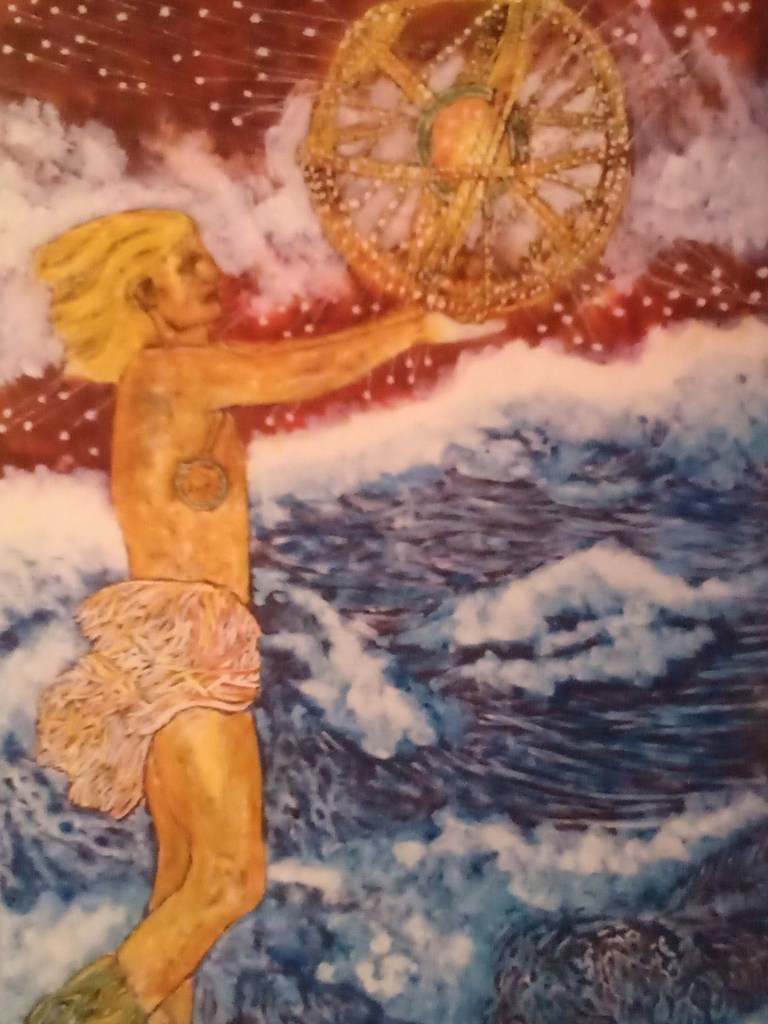
One can view her sacred golden apples – representing immortal life – originating in her light and dark celestial journey. As the evening star, she descends into the Underworld, conquers death, and emerges reborn as the bright morning star. Her five-pointed star hidden in the apple, reflects the dark domain of Hespere, but their outer golden nature, reflects her rebirth accompanying the sun – for gold is a solar metal and, in this context, reflects the sun’s regenerative powers. A serpent is also a solar symbol, so can one view the serpent-like Ladon entwined around its trunk, as an energy coil of solar regenerative power, manifesting in the golden apples above; thrumming with radiant golden light.
From these associations, it can be seen the Tree of the Hesperides possesses the features of a World Tree: its roots are in the earth, while its branches and their golden fruit connect it to the heavens and the movement of Venus; also, to the Underworld, in the dark journey of the soul to immortality.
This pairing of Atlas with a tree of immortality, is mirrored in the omphalos stone at Delphi set beside a sacred laurel tree that can confer immorality; and the Egyptian ben-ben stone was associated with the persea tree, that also conferred immortality. But most importantly in Egypt, both the stone and hence the tree, were connected to Osiris, another (as I will later prove in the narrative) kingly personification of a World Pillar.
The association between the serpent and solar power, may have arisen because the snake form mimics the rays of the sun. Or it may be because the snake itself is a symbol of regeneration, in the shedding of its skin and rebirth in the new. In the Biblical Old Testament, during the sojourn of the Israelites in the wilderness, they were at one point plagued by fiery serpents, whose bites were fatal. To combat this, Moses set up a brass (brass didn’t exist at the time, so it would have been of a refined copper, that resembled and was valued as gold) serpent on a pole, and whoever looked on it was cured. He clearly possessed an object with powerful regenerative powers, symbolized by the golden serpent hanging on a phallic pole, that could eliminate the effects of the poison. A snake curled around a phallic object – itself a symbol of life – is a doubly powerful solar emblem.
The ritual importance of bulls in Atlantis, may also originate in the five-fold heavenly journey of Venus; for the sacred pentagram unfolds between the horns of the sky bull, the Taurus star constellation. Taurus is ruled by Venus, and the heavenly event is called the horns of Venus.
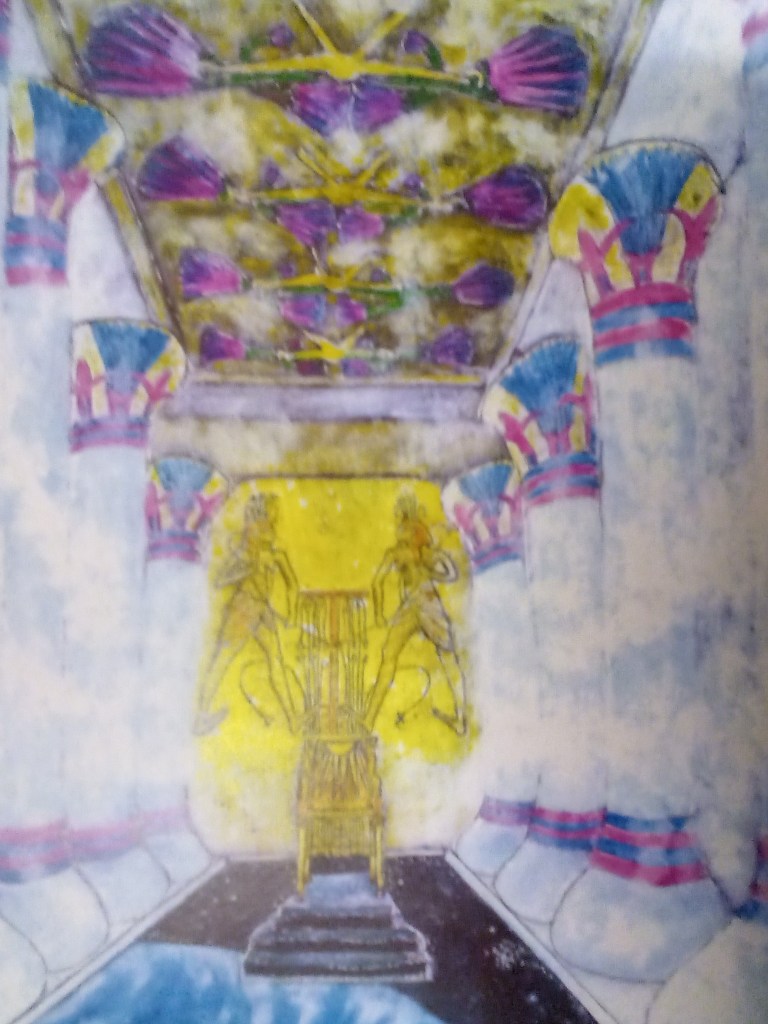
The association of Venus with the Underworld, may explain the ancient use of bull blood, as outlined by Robert Graves in ‘The White Goddess’, as a libation to summon the great dead from that dark domain and ask them questions of importance. The Trojan Aeneas filled a trough of bull’s blood to summon the shade of his father and ask his advice. Was the bull blood libation of Atlantean kings, used to facilitate communication with the immortal royal Atlantean dead in the Underworld? The presence of the statues of their royal ancestors around the temple, does point to the possibility of some form of ancestor worship. Or was it connected to a rite of their cosmic kingship, symbolized by the pillar, that facilitated supernatural communication between the Earth, Heaven and the Underworld? And it is this cosmic kingship, call it Titanic or Atlantean, that I will be following throughout the rest of the narrative.
Atlas is then in his mythology, the first cosmic king of the semi-divine antediluvian race – although as I have written it was probably an eponymous title as Arthur amongst the British or the Irish Simon Breac – who bore the burden of the world link, a kingship destined to mark the annuals of the postdiluvian world.
When I read Plato’s account of Atlantis – a city of concentric rings and interconnecting bridges making it a place of maze-like turnings, that has at its heart a slaughtered bull, ruled by a king whose daughters preside over a fount of immortality – it forcefully reminded me of another ancient place and its mythology. The labyrinth at Knossos on Crete, a place of turnings, that has at its heart the slaughtered bull-man the Minotaur, ruled by King Minos, whose daughter presides over a gateway to immortal life.
The narrative needs to take a Cretan journey, to see what this connection means.
5
The labyrinth, Minotaur, King Minos, Ariadne and Corona Borealis.
In 1900 Sir Arthur Evans 1851-1941, a wealthy scientist, purchased the site where once the ancient palace of Knossos stood on Crete, and began excavations. He unearthed what remained of the building, and restored it with his own money, calling the Bronze Age civilization that constructed it Minoan, after the mythic King Minos. This was before anyone could read the written records of the palace, called Linear A and B, incised on a quantity of clay tablets unearthed there. Michael Ventris eventually deciphered Linear B, but Linear A still has not been decoded.
The rambling complex his excavations unearthed, possessing over a thousand rooms, led him to declare that he had found the mythic labyrinth of King Minos. Terraces, stairs, corridors, halls, cellars, and courtyards followed each other to make up the rambling complex. . . in the Bronze Age it must have presented a terrifying problem to strangers.’4 Although there was no trace of the Minotaur to be found at its heart, the cultic importance of the bull was revealed in a plethora of bull depictions and bull ritual objects. On the palace’s interior walls were the remains of frescos, portraying athletic young men and women, engaging in the sport of bull leaping. The dangers involved are depicted on a Cretan lentoid seal dated 1300-1450 BC, showing one athlete leaping over the back of a bull, while the body of another lies mangled below on the ground.
There is evidence that the Cretan bull was also linked to the heavenly bull Taurus. In 1979 at Amenospilia on Crete, from a shrine dating to c1700 BC, a sarcophagus used to collect the blood of a sacrificed bull, which had a residue of dried blood inside, was discovered bearing the image of a bull with several dots over his body. The pattern of dots was investigated by archaeologists at the University of Laomina, and proved to be the same, as the star pattern of the Taurus star constellation.
Considering this evidence, that Minoan bulls were astrological in nature, may also account for the triangular plaques, often attached to the foreheads of bull cultic objects; or sometimes instead of a plaque a triangle made of three dots. This mirrors the head of the Taurus bull, that has a triangle composed of the three stars of the Hyades (again daughters of Atlas), on its forehead.
There was another cultic object found at Knossos, the labyrs the double-headed axe Plate 1 figure 2, the word is non-Greek and from an unknown origin, and the name labyrinth ‘the house of the double-axe’, is derived from it. Robert Graves in his ‘Greek Myths’, regards the labyrs shape as symbolizing the horns of the waxing and waning moon. Like Robert Graves, Mairanna Ridderstad of Helsinki University considers the cultic bull horns and labyrs as lunar symbols and may also be representative of the sickle-shapes created by the planet Venus, on her journey around the sun, during which Venus encounters 7-8 waxing moons and 7-8 waning moons. Considering the horns of the Cretan bull and the labyrs, as representative of the death-defying journey of Venus into immortal life, they are then another form of pentagram.
But the labyrs could also be considered a powerful symbol of time, the cutting up of its passage in seconds, minutes, hours, days, and months of the moon phases, and the passage of Venus into eternal time that has no indicating hands or cosmic tick tock. And then perhaps also the labyrs represents the journey from one world into the another – from the land of the living to the land of immortal dead.
Something else came into my mind, and that is the eight-pointed star which is also a star of Venus, symbolizing her role as a goddess of fertility. The number 8 viewed horizontally ∞ represents the endless cycles of life-death-regeneration and mimics the shape of the labyrs. Perhaps a Cretan viewing the sacred double-axe understood all of this – this wonderful celestial, earthly and deathless panorama – how much has been lost to the human psyche of the present day, cast adrift in a world of facts and empirical evidence.
Mairanna Ridderstad observes ‘. . .Minoan rule was essentially based on their religion comes from the fact that the ‘palaces’ resemble temple complexes than fortresses. Most of the legends concerning Minos are related to death, laws and bulls, thus hinting at sacrificial practices. . .’ 6 This observation has been made before and has led some to regard the palace as a home for the dead, rather than the living.
Professor H. G. Wunderlich 1928-1974 in his 1974 book ’Secret Crete. A controversial account of archaeological detection’, records after a visit to Knossos, how he doubted that this was an ordinary palace. He finally concluded that he had visited a ‘palace’ of the dead. Here are the main reasons for this conclusion.
The layout of the palace is not conducive to everyday living, it is labyrinthine, corridors ending abruptly, zigzagging routes resembling a honeycomb in a gigantic beehive; that also lacked windows, such as in the Queen’s chamber in a lower story. Contrary to the normal palace construction that possessed great impressive gateways in the east – facing the rising sun – traditionally the gate through which good news was brought; is at Knossos only a small hidden door with a narrow winding stairway.
He discovered, the world-famous queen’s bathroom, contained a bath too small for someone to lie in stretched out. Later Professor Wunderlich discovered that the bathtub, was like the bathtub-shaped sarcophagi, used to bury the dead in a fetal position – surely this was an allusion to the rebirth of the dead person into eternal life. The ‘bath’ did possess a drainage hole, but there was no plumbing connected to it. Although if it is viewed as a bath, the bath water could be emptied into a hole in the floor, connected to a drainage channel; whose purpose was most probably for ritual cleansing of the floor, after perhaps blood libations.
He realized the alabaster slabs, the guidebook informed him covered the floors (although now they are correctly identified), thresholds, flights of stairs and drainage channels, was not alabaster but gypsum; a soft mineral that has no resistance to everyday wear and tear, and long association with water. Covering a floor, for instance, with such material was as impractical as the labyrinthine and lightless nature of the ‘palace’. So, it’s possible to think of its use as symbolic in some way, and most probably connected to rituals for the dead held in the palace – because I am sure the ancients possessing enough sophisticated knowledge to construct the palace, understood the nature of the material they were using.
To complement the impractical use of gypsum, was an array of everyday and cultic objects created in an egg-shell ceramic, often coated in gold leaf to give the appearance of heavy metal objects; that could not withstand normal use. So, were they some form of votive offering to the dead?
The great number of vessels or pithoi found a Knossos, which Evans considered to be storage vessels, just like the bathtub sarcophagi, were also used for burial of the dead. And even the birds, fishes and dolphins decorating the walls could relate to funerary symbolism, for such creatures were said to accompany the dead on their journey.
The eight massive ‘cisterns’ which seem superfluous for their purpose, with their corbelled roofs upheld by a single pillar, resemble more closely a recognized form of underground temple. Professor Wunderlich points out – which the narrative has already revealed – that the dead were not considered to have departed forever from this world, their carefully preserved and venerated bodies, properly provisioned for their otherworldly journey could still be summoned and communicated with, for the benefit of the living.
It was after Professor Wunderlich had reached this conclusion, that he discovered the eminent German historian and philosopher Oswald Sprengler1880-1936, had also doubts about Arthur Evan’s reconstruction. Sprengler pointed out the absence of a protecting wall around the palace, depictions of bulls that was reminiscent of religious iconography and the peculiar nature of the king’s throne; that for him seemed better suited for the mummy of a priest or a votive image. Marianna Ridderstad writes that the throne room has all the hallmarks of a shrine room, where religious rituals were enacted.
The dead, the dead, they throng around these pages, so it’s a good idea to pause a moment, and consider the destination of these myriad shades. For the Greeks, there was a hierarchy in death – not all souls went to the same place.
Tartarus was a great pit beneath the Earth, where the wicked were confined to suffer punishment. A hellish prison, surrounded by a wall of bronze, set with a pair of gates, guarded by the hundred-handed Hekatonkheires. Beyond Tartarus lay the vast halls of Hades, entered by a diamond gate guarded by Cerberus – who allowed everyone to enter, but nobody to leave. The lord of this dark domain, bore the same name as the region itself, Hades. There wandered those human souls, not damned by their earthly deeds. The fields of Asphodel also lay within his domain, where those shades who had been equally evil and good during their lifetimes, resided. The Elysium (the word is of unknown origin) Fields, separated from Hades by the river Lethe, was an adjoining abode, reserved for the souls of virtuous initiates into the mysteries and secret knowledge of their cult. There was a second location for Elysium, not in the underground kingdom of Hades, but a place called the White Island or Isles of the Blessed, and it was reserved solely for the souls of heroes, kings and poets. As was another place called Hyperborea, which has a celestial location.
The dead in Hades, honoured with worship and offerings from the living, came to be called chthonian meaning ’a power of the lower world’. Such an act of worship is depicted on the Cretan Hagia Trioda sarcophagus found at Phaistos: a bull is trussed up on an altar before a shrine, where a musician is playing a flute, accompanied by two female priestesses. According to, Robert Graves, libations of bull blood mystically consumed by the dead, was believed to revive them to an almost living state.
But to return to Knossos. Marianna Ridderstad considers Minos, king of this ritual labyrinthine land of the dead, was probably an eponymous priest-king, who ruled for nine years. Homer referred to him in the Odyssey (11: 568-71) as enneoros, which means ‘reigned for nine years’. After this period, he was sacrificed, and in compensation for the loss of his human life, he became lord of the dead; sitting alongside his brother Rhadamanthus in judgement upon newly deceased souls, arriving naked of worldly pomp, in the kingdom of Hades.
And I wonder if the resurrection of Minos into lord of the dead, finds embodiment in the Minotaur, whose name derives from Minos and tauros ’bull’. His death, resulting in his metamorphosis into a half-man half-bull incarnation of the celestial Taurus, his earthly blood transmuted into divine bull blood; and perhaps used as a most potent libation in a ritual of worshipping, or achieving communication with the great dead.
King Minos in his incarnation as the Minotaur, residing at the centre of the Knossos labyrinth, can be viewed as an axle rod, a World Pillar; around which the realm of the Underworld, symbolized by the labyrinth, revolved in harmony with the land of the living, and the heavens in the Taurus constellation. And was the somersaulting bull leaping performed at the palace, a ritual designed to mimic the heavenly journey of turnings between the horns of the celestial Taurus bull, and rebirth into immortal life?
Marina Morris, from Osage University New Zealand, in a published paper writes about a seal found at Khania, in western Crete, called the ’Mountain Master’ Plate 13 figure ‘The man standing above the centre of the buildings has been identified as a god, but there is the strong possibility he may be a king. Nanno Marinatos points out’. . . the distinction between god and king is not possible to make, for the two are completely identical in iconography’. If he was the king, his authoritative pose, which is similar to the goddess on the ’Mountain Mother’ seal, might be a sign he has divine approval/authority and (is) imbued with this power. . .’7
The ‘Mountain Master’ depicted on the seal, stands upon a central tower, high up in the sky; holding a long rod. Considering the World Pillar kingship linked to Crete, does the tower represent his cosmic role and the rod he is holding a symbol of his divinely ordained powers to link Earth-Underworld-Heaven?
Marina Morris also draws attention to another figure, called the ’priest-king’, part of a wall fresco in the central courtyard of the palace. There is a strong current of belief that the figure, restored in 1901 by M. Gillicron Snr from fragments found in the palace, may have originally been depicted in a similar pose to the ‘Mountain Master’.
But there is one more element to add to this Cretan cosmic drama, for Minos, like Atlas, had a daughter who also presided over a fount of immortality – time to introduce Ariadne.
As I have already related, at the heart of the Cretan labyrinth resided the Minotaur, a monster with the head of a bull and the body of a man. He was the offspring of the adultery between Pasiphaë, the wife of King Minos, and a white bull. Every nine years, seven maidens and seven youths were sent from Athens, as sacrifices for the Minotaur. Theseus, son of King Aegeus of Athens, decided to kill the Minotaur and thereby stop the terrible trade in victims.
The love-struck Ariadne, daughter of King Minos, helped him with his secret plan. She provided him with a sword and a magical ball of yarn. Unravelling the yarn, as he walked through the confusing passageways of the labyrinth, he killed the Minotaur, and then followed the yarn back out and escaped. This ball of yarn, is the origin of the word ‘clue’, from the Middle English clewe meaning rolled up yarn.
In her myth, Ariadne then fled Crete with Theseus, but he forgets the dues of love, abandoning her on the isle of Naxos. She stood wailing with despair on the shore, while his ship sailed out of sight. Such a mournful spectacle, makes the wish for a happy ending, that remorseful he will turn his ship around, but he doesn’t. A happy end creeps up on the myth anyway, the handsome god Dionysus chances that way, finds the rejected maiden, and takes her for his own. Eventually setting up her bridal crown in the stars, as the Corona Borealis constellation, such a starry eternal gift, I feel, must have assuaged her love tormented heart. Corona Borealis means ‘Crown of the North Wind’ and is sometimes called ‘The Northern Crown’ and ‘The Cretan Crown’, relating to the country of her origins.
In the White Goddess, Robert Graves connects Ariadne’s name to the bright star Alpheta, in the horseshoe-shaped Corona Borealis constellation. And he identifies her celestial crown – drawing on Greek and Welsh sources – as a portal through which the land of Hyperborea lies. Hyperborea is from the Greek hyperborean ‘pertaining to the regions of the far north’, from hyper ‘beyond’ and ‘Boreas’ the name of the god of the north wind.
The horseshoe-shaped constellation pointing downwards, does resemble a door. Hyperborea, as I previously explained, is the celestial place where the spirits of great kings, heroes and poets journeyed to after death, to gain immortal life. This celestial location explains the Greek lyric poet Pindar died 438 writing in his Odes: Neither by ships nor by land canst thou find the wandering road to the trysting place of the Hyperboreans.’8
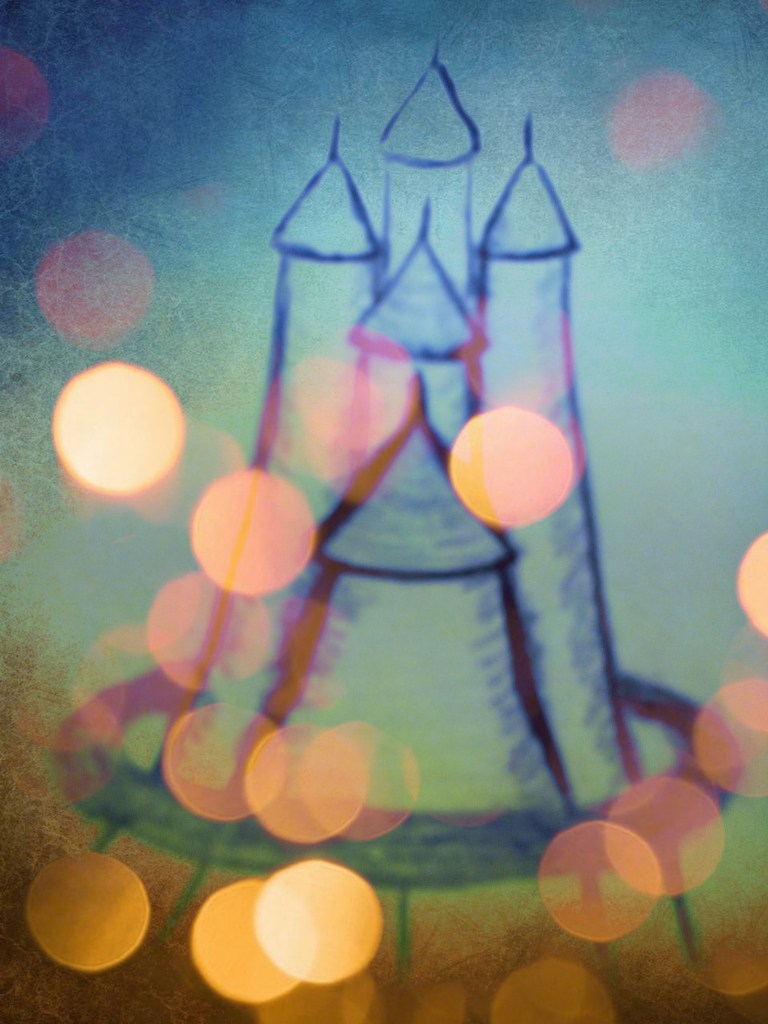
The Welsh called Ariadne, Arianrhodand her star constellation Caer Sidi ‘revolving castle’, and her ‘sidereal spiral castle’ – another place of turnings, but this time celestial. Did she stand at a high window, in the tower, the don john, the innermost keep of her castle, and staring out a high window, watch swans or geese (they both were said to carry such souls to Hyperborea) gliding past with a king, a poet or a hero on its back. Star light glinting from golden crown, precious jewel, or metal armour. The poets dressed in pleasing robes, sailing past, perhaps reciting a few prized poetic verses. There might have been a less happy Welsh voice floating up from the dungeon, where the Welsh poem ‘The Spoils of Anwn’ relate, a poet Gwior was held in blue chains before he escaped. But perhaps she couldn’t hear him, because of the sound of the north wind blowing around her domain, making the music of ice and snow and frost; but she may have shivered upon hearing those sound images of the far north.
I want to pause a while and consider the Caer Sidi, found in the poetry of the highly gifted Welsh Taliesin fl.550. The real reason I want to incorporate this account into the narrative, is because he brings the place alive in the imagination – as it must have been in the hearts and minds of the ancients.
This Otherworld is composed of several revolving fortresses, where a celestial mound – a mound is a place where the prehistoric dead were buried – houses those who know neither aging or sickness. In the Fortress of Four Peaks, which may also be translated as corners, is a cauldron, tended by nine maidens. It produces food for the valiant, the heroes, and poetry – of course, this is the place where heroes and poets are allowed admittance. It also provides golden mead (a mixture of honey and water), sweeter than white wine, where a lot must be consumed, because it is referred to as the place of mead drunkenness.
From this fortress water flows with jet. The semi-precious black stone jet, has a long association with the dead. It is having been found in Roman graves, and was common in Anglo-Saxon graves, of the fifth and seventh centuries. This water connected with death, mirrors the river of forgetfulness Lethe, flowing in Hades – so the water and the intoxicating mead both produce the same effect.
The poem also calls this fortress an island of the strong door, perhaps because whoever resides there, the dead ‘dead drunk’ on golden mead, cannot leave. I can’t help but think, the four peaks or corners represent the cross-beams of heaven, into which the axle-rod-like pole star is set. This equal-armed cross in the heavens, had solar significance, the four arms serving as a giant clock, marking the passage of the sun: the twice-yearly equinoxes, when the sun crosses the celestial equator, and day and night are equal length. The other two representing the twice-yearly solstices – in summer and winter – when the sun reaches its lowest and highest point in the sky at noon, marked by the longest and shortest days of the year.
Above the Four Cornered Fortress there is a Fortress of Glass meaning ice, six thousand men are stationed around its battlements, and it is difficult to speak to their sentinel. Sentinel means someone who stands and watches, and I wonder if this is an allusion to the cold northern pole star, standing amongst a multitude of stars, and keeping the Earth, Heaven and the Underworld in unison – this task wouldn’t allow time for a chat.
Leaving the poetry of Taliesin behind, it can now be seen Hyperborea, that celestial place of turnings, is the template for the earthly ones at Knossos and Atlantis.
The Greek poet Homer 8th century BC, in the Iliad, states there was a dancing floor at Knossos dedicated to Ariadne:
‘Daedaleus in Knossos once contrived,
A dancing floor for fair-haired Ariadne.’ 9
Daedalus in the Cretan tale, is also the contriver of a cow costume in which the lusting wife of Minos, enticed the amorous advances of the white bull.
This dancing floor may be an allusion to the palace’s principal courtyard, where it is known the bull leaping took place. It was dedicated to her, doubtless because Ariadne – in her origins a weaving goddess, concocting the tapestry of life-death-rebirth on the loom of fate – represented by her priestess, would have presided over the mysteries at Knossos. It is possible to view the bull leaping as symbolizing the turning journey to her celestial domain, and the achieving of immortal life by the great dead; while also representing the mystic journey between the horns of the Taurus bull, of the souls of the dead; whose bodies were housed at Knossos.
Dances would have also taken place there, perhaps a dance like the one, the unfaithful Theseus is said to have introduced at Delos; another secret the love besotted, trusting Ariadne may have whispered in his ear, ‘. . . (danced) around a horned altar and represented the circles that coiled and uncoiled in the Labyrinth.’ 10 The dance then creating an energetic labyrinth, transforming the space, into an earthly and cosmic one. Dance is a powerful ritual activity, and the ancients used it extensively in their religious rites, as later, did the Sufis at Konya.
She as the life-death-rebirth goddess, represented by her priestess, would have presided over the ritual death of the king, and his rebirth as lord of the dead; most probably in an underground space. Later perhaps, there was bull leaping, dance, and the sacrifice of a bull on a horned altar, on her dancing floor
The narrative’s journey from Atlantis to Knossos, has revealed the World Pillar kingly role of the First Religion, and the importance of the dead and their immortality lying behind the mythology of both kingdoms. And the traditions of the Cretans, according to the Greek historian Diodorus Siculus fl.1st century BC (based on accounts from several ancient authors), name the Titans as the third race of divine beings (after the Curetes and Dactyls) to inhabit their shores. During the lifetime of Diodorus, it was said there still could be seen the ruins of their dwelling places. The Cretan Curetes and the Cabiri, who will enter the narrative later, both were protective attendants of deities; and the Cabiri and their rites have a Titan origin.
The journey has also brought the narrative into contact with the importance of the northern star constellations Taurus and Corona Borealis. And it is in that northern sky, Draco and Ladon, who guard the Tree of the Hesperides, are also found. Draco is coiled between UrsaMinor, where the present pole star Polaris is situated, and Ursa Major. The ‘pole’ of the pole star is a celestial World Pillar – the template for earthly ones – which earlier ages associated with Atlantis, doubtless based on the mythology of Atlas the World Pillar. The Greek dramatist Euripides 480-c406 BC wrote of it thus:
‘Twin Bears, with swift wandering rushings of their tails,
Guard the Atlantean pole.’ 11
This poem is attributed to St Clement c88-c97.
‘Unwearied Time circles full in perennial flow
Producing itself. And the two bears
On the swift wandering motions of their wings,
Keep the Atlantean pole.’12
It’s time for the narrative to journey heaven wards, where it will investigate the Atlantean pole, Ursa Minorand Ursa Major, Boötes and Hercules constellations. An investigation that will reveal, in conjunction with what has already been made known about Corona Borealis, the macrocosmic template, the cosmic design for Atlantean kingship, outlined in the stars.
6
The northern star constellations
The northern circumpolar stars, viewed from earth, never set below the horizon, and appear to continuously revolve around the pole star; therefore, the ancient Egyptians called them, the unwearying stars. ‘These dominant stars of the Far North are peculiarly but systematically linked with those that are considered the operative powers of the cosmos, that is, the planets as they move in different placements and configurations along the zodiac. . . Cleomedes c150AD speaking of the northern latitudes ‘The heavens there turn around in the way of a mill stone does.’13
In the sky the pole star, the axle rod, around which this celestial millstone turns, remains in a fixed position; for early mariners using celestial navigation, it was a dependable indicator of geographic north, its angle of elevation used to determine latitude. The location of the pole star changes over time, due to the precessional rotation of the Earth on its axis, in the past it’s been more than once in Ursa Minor and Draco.
In the mythology of the pole star, it is referred to as the north nail, a world nail, or post. In the name is a great play on words, a pole – just like a post – can mean a long slender rounded piece of wood. So, the pole of the pole star can be imagined, as a great shaft of wood, a cosmic axle rod, or as a nail banged into place at the top of the cross beams of heaven; to which the north circumpolar stars are attached.
‘Goodbye Heaven – where mortals are at home! Shall I climb the pole? But Callisto (Ursa Major) circles about Olympos, and there shines the ring named after the high crested Arcadian Bear (Ursa Minor)’14
Let’s imagine climbing the pole of the pole star and there, directly above, is the Ursa Minor constellation, where as I previously mentioned, the present pole star is situated. Ursa Minor meaning ‘Little Bear’ is one of the two bear constellations, the other is Ursa Major‘Big Bear’ – both composed of seven stars; they are also called the Big and Little Dipper or Plough. Meandering between them both, is the long body of the Draco the Dragon constellation.
In Greek mythology, the bear constellations are connected to Callisto and Arcas, from the kingdom of Arcadia in southern Greece. The maiden Callisto, who had sworn a vow of chastity, was a hunting companion of the goddess Artemis in Arcadia. The god Zeus seduced Callisto, making her pregnant. When Artemis discovered she had broken her vow, she turned her into a bear, and what happened next has more than one version.
In one, having given birth to her son Arcas, she was hunted in the mountains by goatherds; and surrendered her son to them. They in turn gave him to her impious father Lycaon, king of Arcadia. Which wasn’t a good idea, for in one account, her father eventually kills and uses the dismembered body of his grandson to make a soup, which he then offered to the god Zeus. In another version of Callisto’s tragic story, Zeus turns her into a bear, Artemis shots her dead with a silver arrow; and then Zeus or Hermes rescues Arcas – in an impromptu Caesarian section – from his dead mother’s womb. But overcoming this horrific beginning, Arcas eventually becomes king of Arcadia. In all accounts, it is Zeus who sets Callisto up in the stars as the Big Bear Ursa Major constellation, and her son as the Little Bear Ursa Minor.
The name Arcas itself means ‘bear’. Although the noun for the carnivore bear and the verb ’to bear’, originate in two different PIE roots, both have come to be spelt in the same way. This enables a magical play on words (did the one spelling originate in this ancient word play?), for Arcas, like Atlas whose name derives from ‘to bear’, is also bearing a responsibility, a burden; in that it is his job to ensure the celestial Heaven-Underworld-Earth link continues to function ( a functioning the ancients viewed as crucial to the very working of the solar system). Here in Arcas, is the celestial template for Earthly cosmic kings, such as Atlas.
Arcas fulfilled his cosmic role, by also embodying the nearby constellation of Boötes. Boötes is called the driver of the team of oxen, hitched to the wagon (or wain the Old English word for wagon), or plough of Ursa Major. This team of oxen are the celestial equivalent of earthly threshing ones, that went around in circles, freeing grain from wheat, corn or other crops. So, this is Arcas’s responsibility, he, embodying the pole star, hitches the wagon with its team of oxen to it, and driving it around the heavens; provides the motivating power to keep Heaven, Underworld and Earth revolving in unison.
The narrative (still clinging to the top of the pole star), has already encountered Draco guarding the apple tree of immortality tended by the Hesperides in Atlantis, and here in the heavens it is confronted with the celestial Draco; the template for his earthly embodiment.
This heavenly dragon, is also on guard duty, protecting a celestial fount of immortality of which the Atlantean tree is an earthly expression. So, the narrative, still clinging to top of the pole star and looking across at his sinuous form; will be gradually arousing the suspicions of a potentially dangerous beast.
Before departure, there is time to quickly glance past the ever-watchful dragon to the wagon Ursa Major; for it is in this celestial vehicle, that a precious feminine fount of immortality resides. Because Callisto embodied this fount of immortality, she was called Helice. Helice means ‘that which turns’ and ’willow branch’. The willow is a symbol for eternal life. This association arose, because the physical willow couldn’t be seen to propagate itself through fruit and seeding but appeared to have some innate power; that enabled it to die into itself yet be the source of its own propagation. The importance of this aspect of the star constellation, is reflected in it being most commonly known amongst the ancient Greeks and Romans, as Helice. ‘I guide myself neither by Helice, nor by Arcas (Ursa the bear) . . .’15
According then, to the ancient view, immortality of the human soul is woven into the fabric of the cosmos, a reflection of the immortality of the gods and God.
All earthly World Pillars are connected to entrances to the Underworld, and in the case of the celestial one, this is found in nearby Corona Borealis; below which Boötes and the Hercules constellation, stand side by side as sentinels. This is then a further task for Arcas/Boötes, to protect the portal to the celestial Underworld.
Boötes in connection with Hercules has something else to reveal, about this celestial template for earth life, for they represent the ‘twin’ nature of the semi-divine race on earth – earthly and divine – who carry the burden of this cosmic kingship.
The constellation Hercules was known to the ancients as Engonasia ‘the kneeling one’, in fact looking at the outline of this sign, one leg is partially bent as if the figure is about to kneel. Eratosthenes c275-194, the Greek scholar, geographer and astronomer, who accurately calculated the circumference of the Earth, identified this kneeling position, as Hercules standing over the body of the serpent-like dragon Ladon, who he had killed, before he stole the apples of immortality.
Boötes, clearly represents the divine twin, in his being identified with Arcas the celestial World Pillar. The kneeling thief Hercules, beside the animal he murdered, well suits the earthly one. Hercules was semi-divine, but the human half always seemed to have the upper hand.
He stole the apples of immortality, Hespere did not award them to him, as an apple passport to Elysium or Hyporborea. His history is murky and very human, at one point suffering madness and killing his own children. He ordered the body of one vanquished foe to be torn in two by two colts, and the dismembered limbs to lie unburied and exposed. He discarded a barren wife and murdered a guest. The gods in outrage at his behaviour, sold him into slavery to serve a Queen Omphale. ‘Reports reached Greece that Heracles. . . wore jeweled necklaces, golden bracelets, a woman’s turban, a purple shawl and a Maeonian girdle. . . Teasing wool from the polished wool-basket, or spinning the thread. . .trembling, as he did so, when his mistress scolded him. . . She would strike him with her golden slipper. . . ’16
His life was messy and so was his death. His neglected wife, thinking to rekindle his favour, soaked his shirt in what she thought was a love potion, but it turned out to be poison. When he put it on, the poison soaking into his body caused unendurable pain, in the end he made his own funeral pyre, lay down upon it, and ordered someone to set it alight. Upon which Zeus took his divine part up to heaven. Very human indeed, perhaps this is why he was so popular, and so many cultic shrines were dedicated to him. He, it was thought, could sympathize with the transgressions and foibles of mortals, and intercede on their behalf.
This is now the end of Part One and from its contents, the nature of the First Religion of the world, the celestial template they viewed as lying behind earth life, has been revealed. I dislike the word ‘religion’ because of the horrors, more often than not, enacted by opportunistic men and women, that have been inflicted in its name. But I can’t get away from it, the First Religion was a ‘religion’ in the accepted sense of the word: it embodies a belief in god or gods, a cosmology that gives a certain meaning to the universe, a moral code, and devotional and ritual observances.
Its time now to journey into Part Two and follow the survival of the semi-divine race in the postdiluvial world; bringing with them, Atlantean kingship, the First Religion, advanced knowledge of masonry, science and the civilizing arts. The bear kings of Arcadia and Britain, the kings of Troy, the Tuatha de Dannean kings of Ireland, the Horus kings of ancient Egypt, Nimrod and Davidic kingship. The first stop in this exploration is Arcadia.
 cDt
cDt 